
The easiest earring back is the one you can fasten correctly, feel comfortable wearing, and check without a struggle. Push backs are quick for many stud wearers. Screw backs take longer but can offer a deliberate fastening action. Lever backs work well with many drop earrings, while hinged hoops rely on a latch that should close cleanly. No closure is automatically secure if it is damaged, mismatched, or worn incorrectly.
When shopping online, the front of an earring gets most of the attention. Yet the small part behind the ear affects whether you will actually wear the pair. This guide compares common closure mechanisms, shows what to inspect in product photos, and helps you choose for daily routines, gifts, and comfort. It is about how closures work, not about assigning symbolic meaning to the color of a tiny metal back.

Start with the earring style
Not every back suits every earring. A small stud usually has a straight post with a separate back. A drop may hang from a hook or lever. A hoop may have a hinged post that clicks into a catch, or a different continuous closure. The visible design and the fastening method form one piece. It is not always possible to swap one closure type for another without changing the earring.
Look for product photos from the side and rear. A beautiful front view can hide a short post, a bulky back, or a clasp that is hard to understand. If a listing simply says “secure closure,” ask what kind. You should be able to picture the action of putting it on and taking it off before buying.
Think about how often you change earrings. Someone who switches pairs each morning may value speed. Someone who wears one pair for many hours may care more about how the back rests against the ear. A person with limited hand dexterity may need a larger piece to grip. The easiest closure is personal, and a try-on can be more revealing than a general ranking.
Push backs: quick and familiar
A push back, sometimes called a friction or butterfly back, slides onto a straight post. Curved metal parts grip the post by tension. Many posts have a small groove near the end that helps the back settle. The design is common because it is simple to use and can be compact behind the ear.
Put it on by holding the decorative front steady and guiding the back along the post without forcing it. The back should feel secure while remaining removable with normal pressure. If it slides freely, it may be worn, mismatched, or not fully seated. If it requires uncomfortable force, the tension or fit may need attention. A jeweler can evaluate a back and post as a pair.
Push backs are convenient for small studs, but they are easy to misplace. Keep each pair with its backs in a divided box. Do not assume a loose back from another earring is a perfect replacement simply because it fits over the post. Different post thicknesses and grooves can change how it holds.
For a heavier stud, a larger supporting back may spread the weight and help the front sit upright. The right support depends on the earring's construction and the wearer's ear. If a stud droops, changing the back may help, but first check whether the post, setting, and overall weight are suitable.
Screw backs: deliberate but slower
A screw back turns onto a threaded post. The motion can feel reassuring because the wearer must rotate it to remove it. It can be useful for someone who likes a more deliberate fastening method. It also takes more time and finger control than sliding on a push back. A small screw back can be hard to handle if your hands are cold or you are in a hurry.
Match the back to its post. Threads must align; forcing a back at an angle can damage them. Start gently and stop if it binds. The back should sit where the maker intends, without pressing uncomfortably against the ear. Check it periodically because movement and handling can affect any closure over time. “Screw” does not mean “never check.”
Consider the post's feel during insertion. A threaded section may feel different from a smooth post. The design and finish matter. If you have sensitive ears or a new piercing, follow qualified care advice rather than choosing a closure solely from a product description. This guide concerns jewelry mechanics, not treatment of a piercing problem.
When buying a gift, learn whether the recipient enjoys this kind of closure. Some people appreciate the extra step; others find it frustrating. An earring that takes too long to fasten may stay unworn, even if it is beautiful from the front.
Lever backs: a hinged option for drops
A lever back often has a curved wire that passes through the ear and a hinged piece that closes behind it. This creates a continuous loop around the piercing when shut. It is common on drop earrings because it can keep the decorative part hanging freely while offering a closure that does not require a separate tiny back.
Check that the lever opens and closes smoothly and reaches its intended catch. If it no longer meets the wire or feels loose, stop wearing it until it is assessed. A lever that closes with excessive force may also be uncomfortable. Treat the hinge gently; bending it by hand can make alignment worse.
The shape can be easier to grip than a very small push back, but the earring may move more than a stud. If you wear headphones, high collars, or scarves, check whether the drop catches. The closure may be secure while the decorative part still interferes with your routine. Both elements matter.
Hinged hoops and latch backs
A small hoop may use a hinged post that clicks into a notch in the opposite side. Another hoop may use a wire that hooks into a catch. These designs are often described broadly as latch or click closures, but the exact mechanism varies. View the back or a demonstration if you are unsure how it works.
A good closure should align cleanly. If you need to pull the hoop out of shape to make it close, something may be wrong. Listen or feel for the intended click if the design has one, then gently check that the post has seated. Do not repeatedly flex a thin hoop to make a worn latch work.
Hoop size and weight affect comfort as much as the latch. A wide or heavy hoop can move and pull more than a small huggie style. Try the pair for ordinary motion and make sure the closure remains closed. Our hoop collection shows different silhouettes; confirm each exact product's fastening method before buying.
Open hooks and other drop styles
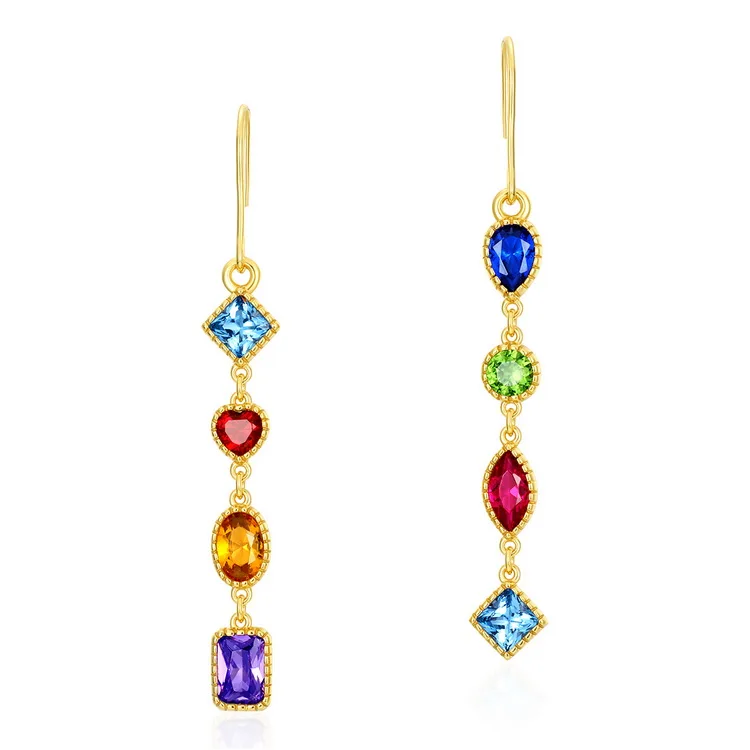
A simple wire hook can be easy to put on because there is no separate back to manage. It also may be easier for the earring to slip out during active movement, depending on shape and fit. Some designs use a small stopper or a longer curved wire. Check what the maker supplies and whether it suits your routine.
Do not add an unrelated tight stopper without checking compatibility. It can bend a fine wire or make the earring uncomfortable. If you want a more enclosed fastening method, choose a drop design built with a lever or other closure rather than improvising a change to a delicate hook.
Open hooks may be best for shorter, calmer wear when you can notice the earrings. A person who frequently removes scarves or changes clothes may prefer a closed design. The right choice depends on the whole earring, not on one generalized claim that hooks are easy or unsafe.
How to judge security in real life
Security starts with correct use and sound condition. A push back should grip its post; a screw back should turn smoothly on matching threads; a lever should meet its catch; and a hinged hoop should close as intended. Inspect the pair before wearing it. A damaged closure can make even an expensive earring insecure.
Try putting the earrings on over a soft surface so a small back is easy to find if dropped. Once fastened, move your head naturally and touch the closure gently to confirm it is seated. Do not tug hard on the decorative front. If the back changes position or the earring feels unstable, remove it and investigate.
Check again after a change of clothing or activity that could touch the ear. Pulling on a sweater, taking off headphones, or adjusting a scarf can disturb an earring. A quick touch is useful, but do not make constant checking a substitute for a closure that actually fits.
For a valuable or sentimental pair, a jeweler can inspect tension, threads, hinge alignment, and post condition. If a push back is loose, do not assume squeezing it at home is harmless. Excessive adjustment can make it uncomfortable or damage a thin component. Professional adjustment may be simple and more reliable.
Comfort is more than the back type
Post length matters. A post that is too short may crowd the ear and make the back press. A very long post may poke when you lean against a chair or use headphones. The position of the piercing, the earring's weight, and the size of the front also affect how the pair sits. Ask for dimensions when a listing gives only a close-up image.
Material information matters for the parts touching skin. A yellow or silver color does not identify the metal. If you avoid certain materials, ask about the post and back separately from the decorative front. A pair may use different materials in different components. Do not rely on an unverified “sensitive ears” label without a clear composition.
A large back can support a stud, but it may feel bulky if you lean on it. A tiny back may disappear visually yet be hard to grip. If you often wear over-ear headphones or sleep with jewelry, consider how the back presses. Removing earrings when pressure or snagging is likely may be more comfortable than seeking a closure that promises to suit every activity.
Buying earrings as a gift
Check whether the recipient has pierced ears and what kind of earrings they already wear. A person who almost always chooses small studs may find a large lever-back drop inconvenient. Someone who loves drops may appreciate a closure that does not involve a separate tiny piece. The gift should match their habits as well as their taste.
Look at how they manage closures. If they routinely ask for help with small backs, a tiny screw back may be frustrating. A larger hinged mechanism might be easier, but it must suit the earring and feel comfortable. If the gift is a surprise, choose a seller with clear return terms and avoid claiming a fastening method is universally secure.
Browse earring styles with both front and back in mind. Verify the product details for the exact pair. A photo of a similar style does not confirm the closure on the one you order.
Storage and care for small closures
Keep backs with their matching posts. A divided box reduces the chance of mixing pieces with slightly different dimensions. Fasten hinged closures before storage so a loose post does not catch a neighboring earring. Store delicate drops separately to avoid pressure on the hinge or setting.
Wipe ordinary residue with a suitable soft cloth and follow the actual material instructions. Avoid getting cleaning solution trapped in a hinge or around a sensitive stone. If a back feels different after cleaning, check that it is fully dry and properly seated before wearing. Our jewelry care page provides general habits; the exact item may need more specific guidance.
Notice changes early. A push back that begins sliding, a screw back that binds, or a lever that no longer reaches its catch deserves attention. Do not wear an expensive pair “just this once” with a closure you already know is faulty.
Compare closures with a simple try-on
Put the earrings on in a calm, well-lit place. Set a soft cloth below your hands to catch a back if it slips. Time yourself only loosely: the question is whether you can fasten the pair without strain, not whether you can do it in a particular number of seconds. A closure that takes slightly longer but feels natural may be better for you than a quick one you never trust.
Once the pair is on, inspect how the front sits. A stud should face forward rather than droop heavily. A drop should hang as intended without twisting painfully. Touch the back gently and confirm it is in the expected position. For a hinged hoop or lever, look for full closure. For a screw back, check that it has turned smoothly onto its matching post.
Wear the pair during ordinary activities for a short period. Use your usual glasses, headphones, hairstyle, or collar. These may reveal pressure or catching that a mirror check misses. If the earring is uncomfortable, determine whether the cause is weight, post length, metal, or the back. Buying a different back cannot solve every comfort issue.
Remove the earrings normally. Can you grip the back without pulling on the front setting? Does the clasp release smoothly? A closure should be manageable at both ends of the day. If removal requires force or leaves you worried about bending the earring, ask a professional whether the fit is correct.
How closure choice changes with the occasion
For a long desk-based day
A compact stud with a comfortable push or screw back may stay out of the way. If you wear a headset, the back's thickness can matter as much as the front size. Try the pair with your actual headset or similar pressure. An earring that presses into the ear after an hour may be a poor daily choice even if its fastening is secure.
A small hinged hoop can also work for some people, but confirm that the latch closes fully and the hoop does not interfere with hair or clothing. Comfort during repeated wear is a stronger signal than a broad description such as “office friendly.”
For a dressy event
Drop earrings can add movement, and lever backs may give a closed loop without a separate tiny back. Check the weight and whether the decorative part catches an evening outfit. Put the earrings on after styling hair and clothing when practical, then confirm the closure once before leaving. Keep an empty compartment in your bag or at home for safe removal afterward.
If an event involves dancing or frequent hugs, a closure you can check quickly may feel reassuring. That does not mean choosing the tightest possible mechanism. Pressure and discomfort are not evidence of security. A properly fitted design should be comfortable as well as closed.
For frequent travel
Choose a fastening method you can operate without a large mirror and store the pair with its components together. Separate backs are easy to lose on a hotel counter. A hinged style removes that small loose part, but the hinge still needs protection in the case. Pack each earring so its post or decorative edge cannot scratch the other.
Do not assume you must wear earrings continuously to avoid losing them. A consistent storage spot and a quick count before leaving a room are useful. A practical travel pair is one you can put on and remove confidently while following the item's care instructions.
What to do when a closure feels wrong
If a push back begins to slide, compare it with the matching back from the other earring. Check whether the post is straight and whether the groove is intact. Do not bend the post to make an ill-fitting back grip. A jeweler can inspect the spring tension and advise on a suitable replacement. Keep the earring out of use until the fit is reliable.
If a screw back binds, stop turning it. Forcing mismatched or crossed threads can make the problem worse. Separate the parts gently if possible and ask for assessment. A screw back should not need to be driven on with pressure. The security comes from a properly matching mechanism, not force.
If a lever or hinged hoop fails to align, do not keep wearing it open or nearly closed. A small gap can let it release during movement. Avoid bending a delicate hinge repeatedly at home. A jeweler can determine whether it can be adjusted or needs repair. If the earring is new, contact the seller promptly with a clear description.
If the back is comfortable but the ear hurts, check the entire design and seek qualified health advice for symptoms rather than assuming a different closure is the only answer. This article cannot diagnose skin reactions or piercing problems. Clear metal information and a comfortable fit are useful buying factors, but a persistent physical problem deserves proper attention.
Questions to ask on a product page
What is the exact closure name? Is the back included? Is the post smooth or threaded? What are the post length and earring weight, if available? Are the front, post, and back made from the same material? Can replacement backs be obtained for this model? These questions are more useful than a generic “secure” label.
Ask for a rear view if none is shown. A close-up can reveal whether a hoop uses a hinged post, whether a drop has a lever, or whether a stud has a screw thread. A product title may use familiar closure terms loosely, so the actual photograph and seller description should agree. If they do not, clarify before ordering.
Review exchange terms, especially for earrings. Return conditions may differ from other jewelry. If you are buying a gift, knowing the policy lets the recipient try the pair and choose a more comfortable closure if needed. Do not open or modify a closure in a way that could affect that policy before you understand it.
Frequently asked questions about earring backs
Which earring back is most secure?
There is no universal winner. A well-made, correctly fitted screw, push, lever, or hinge closure can work, while a damaged one can fail. Choose the mechanism you can use correctly and inspect its condition.
Are push backs safe for everyday studs?
They are commonly used and convenient. The back needs to grip the matching post and remain comfortable. Check for looseness and replace or adjust a worn back through a qualified jeweler.
Why does my screw back feel difficult?
The threads may be misaligned, the back may not match the post, or the small part may simply be hard to grip. Do not force it. Ask the seller or a jeweler to inspect the pair.
Can I replace a lost back with any spare?
Not reliably. Posts and backs vary. A spare that slides on may not grip securely or may press too tightly. Check compatibility before wearing the earring out.
Do lever backs suit everyday wear?
They can, if the hinge closes properly and the drop is comfortable for your routine. Consider scarves, hair, and headphones as well as the closure.
What if a hoop will not click closed?
Stop wearing it until the mechanism is assessed. Repeatedly bending the hoop can worsen alignment. A seller or jeweler can advise whether the latch needs service.
Is metal color a clue to back quality?
No. Color does not identify the material, spring tension, or construction. Read the stated composition and evaluate how the closure actually works.
Five small details people overlook
First, the back can be sold separately from the decorative front in some contexts. Check what the product includes. Second, a post can be longer or shorter than the one you already own, even if the front looks similar. Third, a heavier stud may need a supportive back to sit upright. Fourth, a hoop's latch can feel different from the closure shown in a styled photo. Fifth, the material touching the ear may differ from the visible front.
These details are easy to miss because product images favor the sparkle. Before checkout, turn the image around if a rear view is available and read the component list. If the listing is vague, ask for the closure name and materials. A straightforward answer can prevent a pair from becoming an attractive object that is difficult to wear.
When the earrings arrive, keep the packaging until you have tried the closure carefully. Compare both sides of the pair. They should operate similarly, though handmade details may vary slightly. If one back slides while the other holds, identify which part differs and contact the seller before wearing it out.
When to replace rather than adjust a back
A lost or damaged back may be replaceable, but it must suit the post. A jeweler can check tension and compatibility. A bent screw thread, cracked hinge, or post that has become weak may need more than a new loose component. Do not make a worn mechanism feel secure by applying adhesive or forcing metal into place.
For a sentimental pair, bring both earrings to the professional. The intact side can show how the closure was intended to work. Explain whether the problem appeared gradually or after a snag. If the pair is new, keep a record of the issue and ask the seller about service. The aim is a closure that works predictably, not one that feels tight only after a risky home adjustment.
Replacement is also a chance to ask whether the existing back type still suits your routine. If you consistently struggle with a tiny screw back, a jeweler may be able to discuss suitable options, though changing the mechanism can require more than swapping the back. If you value a particular pair, invest in a solution that lets you wear it comfortably.
How to store a pair so the closure stays usable
Use a divided box or soft pouch with enough space that posts are not bent by another piece. Put separate backs in a small designated section with their matching earrings. Close hinged hoops and levers before storage, but do not force a latch that feels misaligned. Keep heavy jewelry from pressing on tiny mechanisms.
When traveling, count the small parts before closing the case. A stud front and its back are two pieces; losing either makes the pair unusable. Lay them on a soft surface while changing earrings, not a sink edge. When you return home, inspect the closure before placing it back in storage. This simple routine catches wear before the next outing.
Choose the closure you can live with
Start with the earring style and your routine. Then check the back mechanism, comfort, material, and condition. A closure that is easy for one person may be awkward for another. The best choice is the one you can fasten confidently and wear without thinking about it all day.
Keep a matching spare back only if you know it fits the post. Inspect your favorite pair regularly, especially before a long event or trip. If a mechanism changes, address it before wearing the earrings again. A small closure deserves attention because it is the part that lets the visible design stay with you.
When comparing two pairs, use the same questions: Can I put them on without force? Do they sit comfortably? Can I remove them without pulling the setting? Do I understand the metal touching my ear? Those answers will usually guide you more effectively than a broad promise that one back type is always the safest.
Try the closure during an ordinary day before trusting it for a long event. Keep the matching parts together in storage. A small amount of attention to the back can make a favorite pair much easier to enjoy.